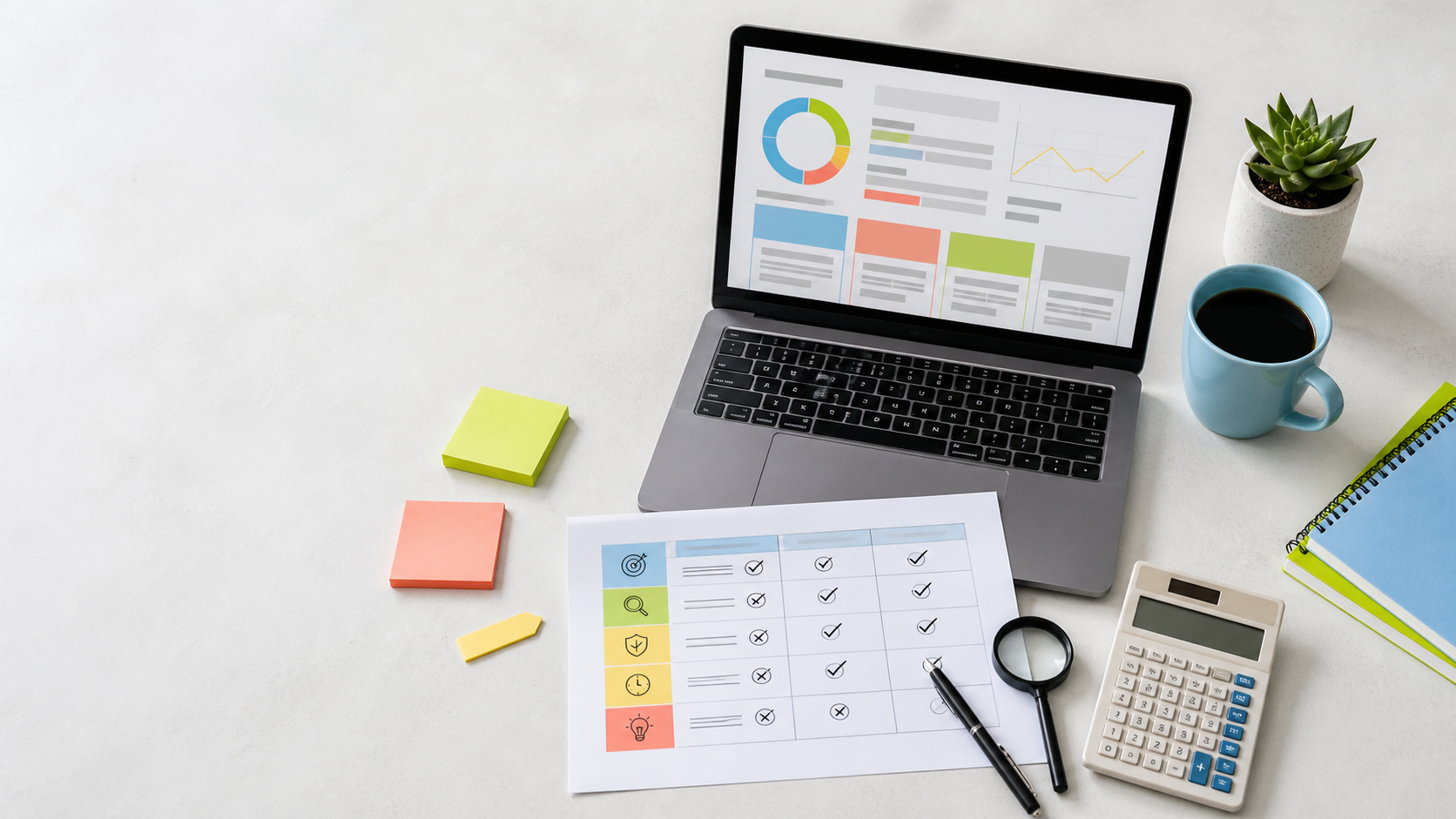
Test demand before a large investment by naming the riskiest customer assumption, identifying a reachable buyer, presenting a specific offer at a realistic price, and measuring a meaningful commitment such as a qualified call, booking, deposit, preorder, or paid pilot. Decide the pass, revise, and stop thresholds before the test begins.
Research and validation are different. Research helps you understand customers, competitors, prices, and constraints. Validation asks whether your particular offer can earn a particular response. Both matter, but a large market report cannot replace evidence that you can reach and convert customers.
Start with the assumption that could waste the most money
"Will the business work?" is too large for one test. Choose the uncertainty most likely to make the next investment premature. It may be demand, price, delivery time, customer acquisition cost, repeat purchase, location, regulation, or technical feasibility.
At least five local property managers will request a quote for a defined service this month.
Qualified buyers will accept a $300 pilot rather than only a free consultation.
The work can be completed safely in four hours with the planned equipment.
A capped outreach test can produce qualified calls without relying on a large audience.
Write one test per assumption. If the result is muddy, you will know which variable to change.
Use an evidence ladder
| Signal | What it can tell you | Limitation |
|---|---|---|
| Search and trend data | People express interest in the topic | Does not prove demand for your offer |
| Customer interview | Language, workflow, pain, alternatives | People may be polite or hypothetical |
| Waitlist or qualified inquiry | Willingness to identify and continue | Still easier than paying |
| Quote request or scheduled call | Active consideration | May not convert at your price |
| Deposit, preorder, or paid pilot | Willingness to exchange money | Must still be delivered and retained |
| Repeat purchase or referral | Value after experience | Requires time and adequate delivery |
Move only as high as the next decision requires. You do not need a year of sales to justify a small pilot, but a handful of compliments should not justify a lease.
Interview customers without selling the answer
Ask about recent behavior: the last time the problem occurred, what they did, what it cost, who approved the purchase, and why the current solution was acceptable or frustrating. Avoid "Would you buy this?" before you understand the situation. Hypothetical enthusiasm is cheap.
- Tell me about the last time this happened.
- What did you try, and what did you pay?
- What made the issue urgent or easy to postpone?
- Who else is involved in the decision?
- What would make a new provider or product too risky?
- May I follow up with a specific pilot offer?
The SBA recommends evaluating demand, market size, location, saturation, and competitor pricing. Interviews add local and behavioral detail to that foundation.
Make a real, ethical offer
State the customer, problem, deliverable, price, timing, and limits. If the product is not finished, say so. Do not imply inventory, accreditation, results, or delivery capacity that does not exist. A truthful pilot can still ask for money.
Example pilot
"I am testing a two-week review-response service for three independent dental practices. The pilot includes a review audit, 20 drafted responses, and a handoff template for $250. It does not include posting access or reputation guarantees. Would you like to review the one-page scope?"
This produces better evidence than "Would you be interested in social media help?" It is specific enough to reject, price, and deliver.
Set the thresholds before seeing results
Define the audience, number of attempts, channel, time window, budget cap, and evidence standard. Example: contact 30 qualified businesses individually over ten days; pass if five request the scope and two buy the pilot; revise if interest is clear but price or scope objections repeat; stop if the right people consistently report no problem or no buying path.
Track denominators. "Two sales" means something different after ten qualified conversations than after 2,000 cold messages. Also record why people declined. The purpose is learning, not manufacturing a flattering conversion rate.
Choose a test that matches the business model
Offer a limited number of paid pilot appointments using rented or borrowed equipment where safe and permitted.
Sell a small live workshop or manual service before building a large self-serve course or software product.
Use samples, retailer conversations, or clearly disclosed preorders before committing to a large production run.
Measure qualified booking requests, utilization windows, cleaning and turnover time, damage terms, and local rules before acquiring assets.
A failed small test can be valuable when it prevents a large fixed commitment. A passing test is not a guarantee; it earns the next bounded experiment.
Frequently asked questions
What is the best evidence of customer demand?
Evidence becomes stronger as the customer accepts more real commitment. A paid booking, deposit, preorder, or completed pilot generally reveals more than a survey answer, like, or email signup.
Can I test demand before building the product?
Often yes, if the offer is clear and honest about what exists, when it will be delivered, and how refunds work. Service pilots, waitlists with qualification, refundable deposits, and preorders can test different assumptions.
How many customer interviews are enough?
There is no universal count. Continue until recurring patterns are clear enough to design a sales test, then ask for a real commitment. Interviews improve the offer; purchases test it.
Sources and methodology
The examples are test designs, not forecasts. Local laws, platform rules, and customer-protection obligations still apply.